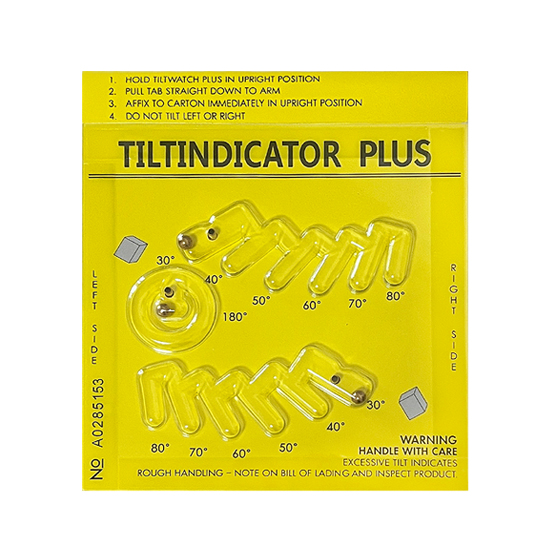
Importance of Tilt Indicator Labels in Shipping and Cargo Handling
Shipping and handling operations can expose products to unexpected tilting, inversion, and improper positioning. This is particularly important for goods that must remain upright during transportation and storage. Once a package or container is tilted beyond its allowable position, internal components, liquids, precision mechanisms, or other sensitive contents may be affected.
Tilt indicator labels provide a simple and effective way to monitor the orientation of goods throughout the supply chain. Attached directly to the outside of a package or shipping container, these indicators provide a visible warning when cargo has been tilted beyond a predetermined angle. This allows handlers, receivers, and logistics teams to quickly identify potentially mishandled shipments and determine whether further inspection is necessary.
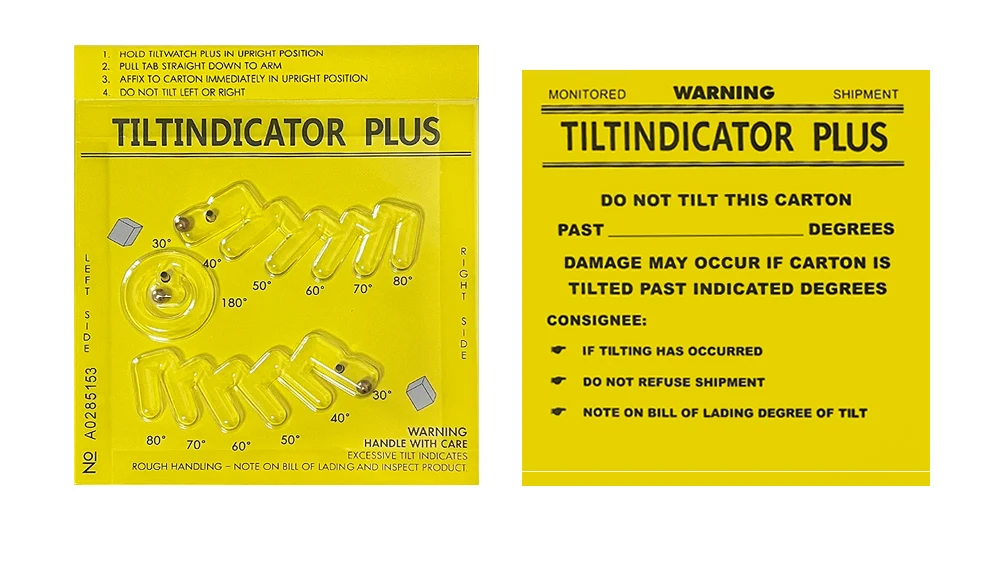
What Are Tilt Indicator Labels?
A tilt indicator label is a visual monitoring device designed to detect and record excessive tilting or inversion of a package during transportation or storage. Unlike electronic monitoring equipment, a tilt indicator does not require batteries, software, or a separate power source.
When a shipment must remain upright, the tilt indicator for shipping can be attached to a clearly visible position on the outer packaging. If the package is tilted beyond the specified angle, the indicator changes visually and provides an immediate indication that the required orientation has not been maintained.
This makes shipping tilt indicators particularly useful for products that are sensitive to incorrect positioning during loading, unloading, warehousing, and delivery.
Why Are Tilt Indicators Important for Shipping?
During transportation, cargo may be exposed to a variety of handling conditions. Packages can be moved by forklifts, pallet jacks, conveyors, cranes, or manually by warehouse personnel. Even when the outer packaging appears undamaged, improper tilting or inversion may have occurred during one of these handling stages.
Using tilt indicator labels for shipping helps companies monitor this risk.
The indicator provides a straightforward visual record that can help answer important questions after delivery:
– Was the package kept upright during transportation?
– Was the cargo tilted or inverted during handling?
– Should the shipment be inspected before acceptance?
– Was the required handling procedure followed?
– Can the shipment condition be documented for future investigation?
By providing visible evidence of improper handling, tilt indicators can add an additional layer of protection to the shipping process.
The visible status of the indicator reminds everyone involved in the transportation process that the package is being monitored. This encourages warehouse workers, carriers, and handlers to pay more attention during loading, unloading, and delivery.
By displaying a clear warning label on the package, shock indicator labels help reduce careless handling and promote safer transportation practices.
Reducing the Risk of Transportation Damage
Some products are specifically designed to remain upright throughout transportation. Examples may include liquid-filled equipment, precision instruments, medical equipment, industrial machinery, and other sensitive products.
If these goods are placed on their side or turned upside down, their performance or condition may potentially be affected.
A shipping tilt indicator helps reduce this risk by making orientation requirements visible to everyone involved in the transportation process. Warehouse operators and carriers can immediately see that the shipment needs to remain upright, while receivers can check the indicator before opening or accepting the package.
More importantly, the indicator can provide evidence when improper handling has occurred. This allows companies to inspect potentially affected products at an early stage rather than discovering problems later.
Improving Accountability Throughout the Supply Chain
Cargo often passes through multiple stages before reaching its final destination. A shipment may be handled by manufacturers, warehouses, freight forwarders, carriers, distribution centers, and receiving teams.
Without a monitoring device, it can be difficult to determine when improper handling occurred.
A tilt indicator label creates a simple visual record of the shipment’s orientation. If the indicator has been activated, the receiving team can document the condition of the package and investigate the shipment before putting the goods into service or inventory.
This can improve accountability among different parties involved in transportation and help companies identify recurring handling problems.
Supporting Shipment Inspection and Damage Claims
When a shipment arrives with visible damage, determining the cause can sometimes be challenging. Packaging may show limited external damage even though the goods inside have been exposed to improper handling.
Tilt indicators can provide additional information during the receiving inspection process.
If the indicator has changed, the receiver can record its condition, take photographs, and inspect the contents more carefully. This information may also be useful when communicating with logistics providers, carriers, or insurance companies regarding a potential transportation damage claim.
Although a tilt indicator does not replace a complete inspection or other shipping documentation, it provides an additional piece of evidence that can make the investigation process more straightforward.
Applications of Tilt Indicators in Shipping
Tilt indicators for shipping containers and packages can be used across a wide range of industries where product orientation is important.
Common applications include:
Medical equipment
Electronic equipment
Industrial machinery
Laboratory equipment
Glass and fragile products
Liquid-containing equipment
Manufacturing equipment
Heavy or oversized equipment
Sensitive components and assemblies
For international shipments, tilt indicators can be especially useful because cargo may pass through several transportation and handling stages before reaching the final customer.
How Do Tilt Indicator Labels Work?
Tilt indicators are designed to provide a clear visual indication when a shipment exceeds a specified tilt angle.
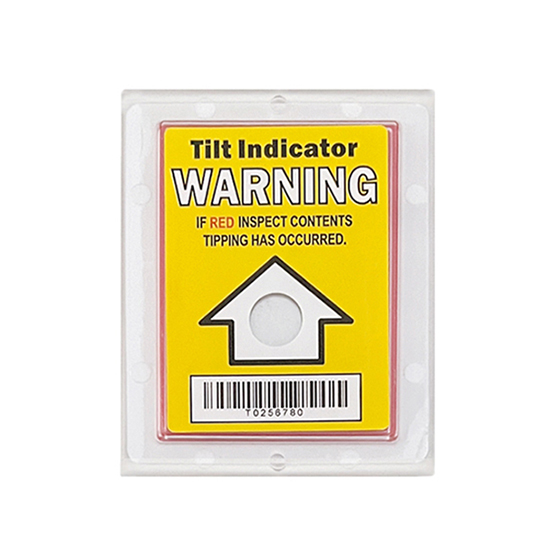
For example, YTX tilt indicator labels are designed for goods that must remain upright. The indicator is attached to the outside of the shipping package in a visible location. When the package is tilted more than 80° from the vertical direction, the silver dot on the indicator changes to red.
Because the indicator does not require electronic equipment or continuous monitoring, it can be easily incorporated into existing packaging and shipping procedures.
This irreversible feature ensures reliable monitoring results and provides clear evidence that abnormal handling may have occurred.
Tilt Indicators for More Reliable Cargo Monitoring
As global supply chains become increasingly complex, companies need practical ways to monitor shipment conditions without significantly increasing logistics costs. Tilt indicator labels offer a simple solution for monitoring cargo orientation throughout transportation and storage.
They do not require batteries, electronic equipment, or complicated installation. Once attached to the package, the indicator remains visible to handlers and receivers and can provide immediate evidence when excessive tilting occurs.
For businesses transporting products that must remain upright, incorporating shipping tilt indicators into standard packaging procedures can improve shipment visibility, support receiving inspections, and help reduce the risk associated with improper handling.
YTX Tilt Indicator Labels
Qinhuangdao YTX Technology Co., Ltd. provides tilt indicator solutions designed to visually monitor tilting, inversion, and improper handling of goods during transportation and storage.
YTX tilt indicators help companies identify whether products have been maintained in the required upright position during handling and transit. When the monitored package is tilted beyond the specified limit, the indicator provides a clear visual change that can serve as evidence of improper orientation.
For YTX’s tilt indicator label, when the goods tilt more than 80° from the vertical direction, the silver dot changes to red. This highly visible color change allows logistics personnel and receiving teams to quickly identify a potentially mishandled shipment.
By adding a tilt indicator label to the outside of the package, companies can make handling requirements more visible, identify potential transportation problems, and create a useful record for subsequent inspection and responsibility tracing.
For manufacturers, exporters, logistics providers, and companies shipping sensitive equipment, tilt indicators are a cost-effective way to add an extra layer of protection to the transportation process.
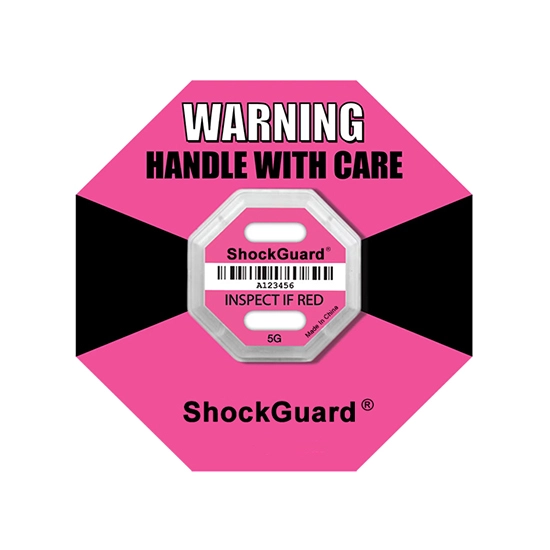
Shock Indicator

Impact Indicator
Tilt Indicator Plus